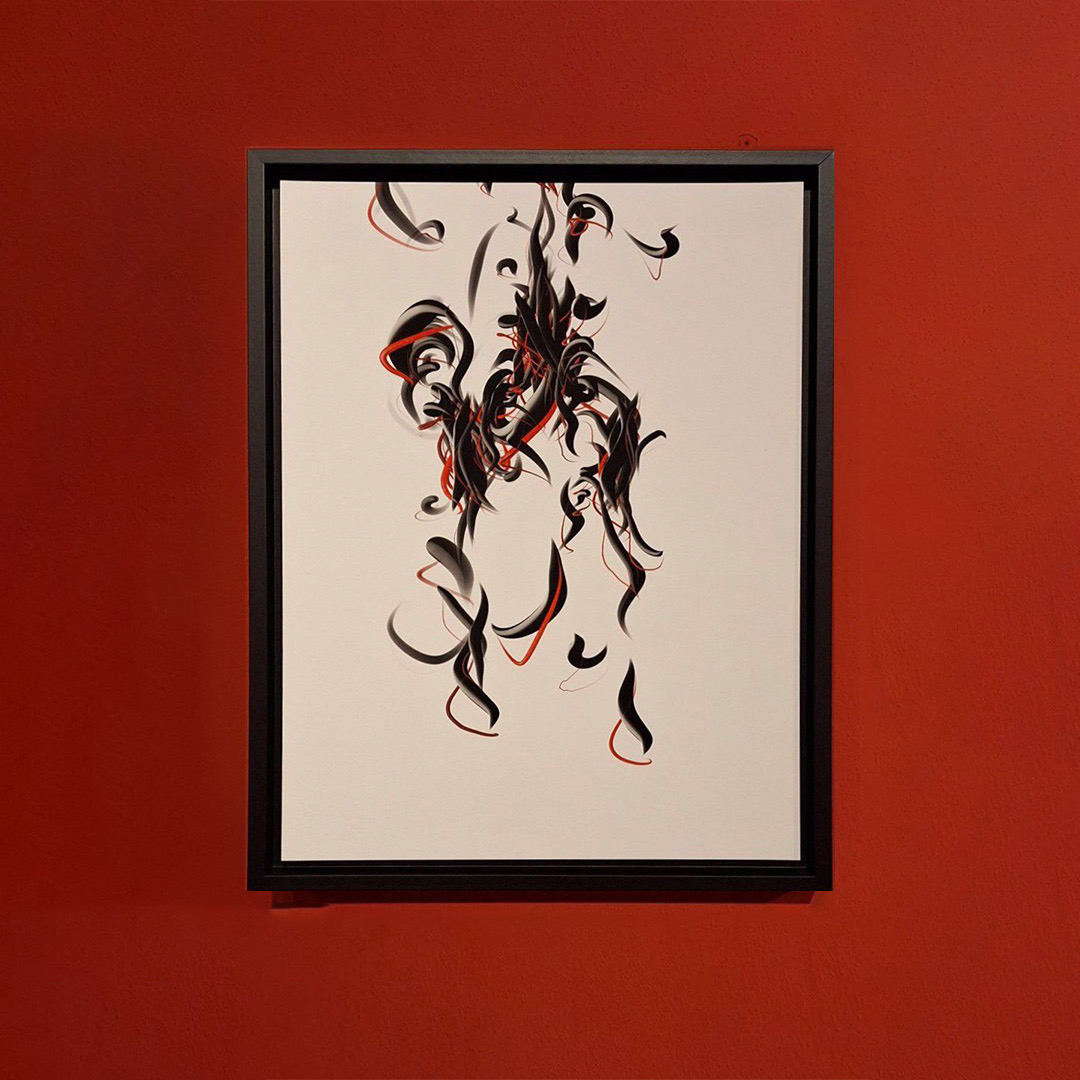
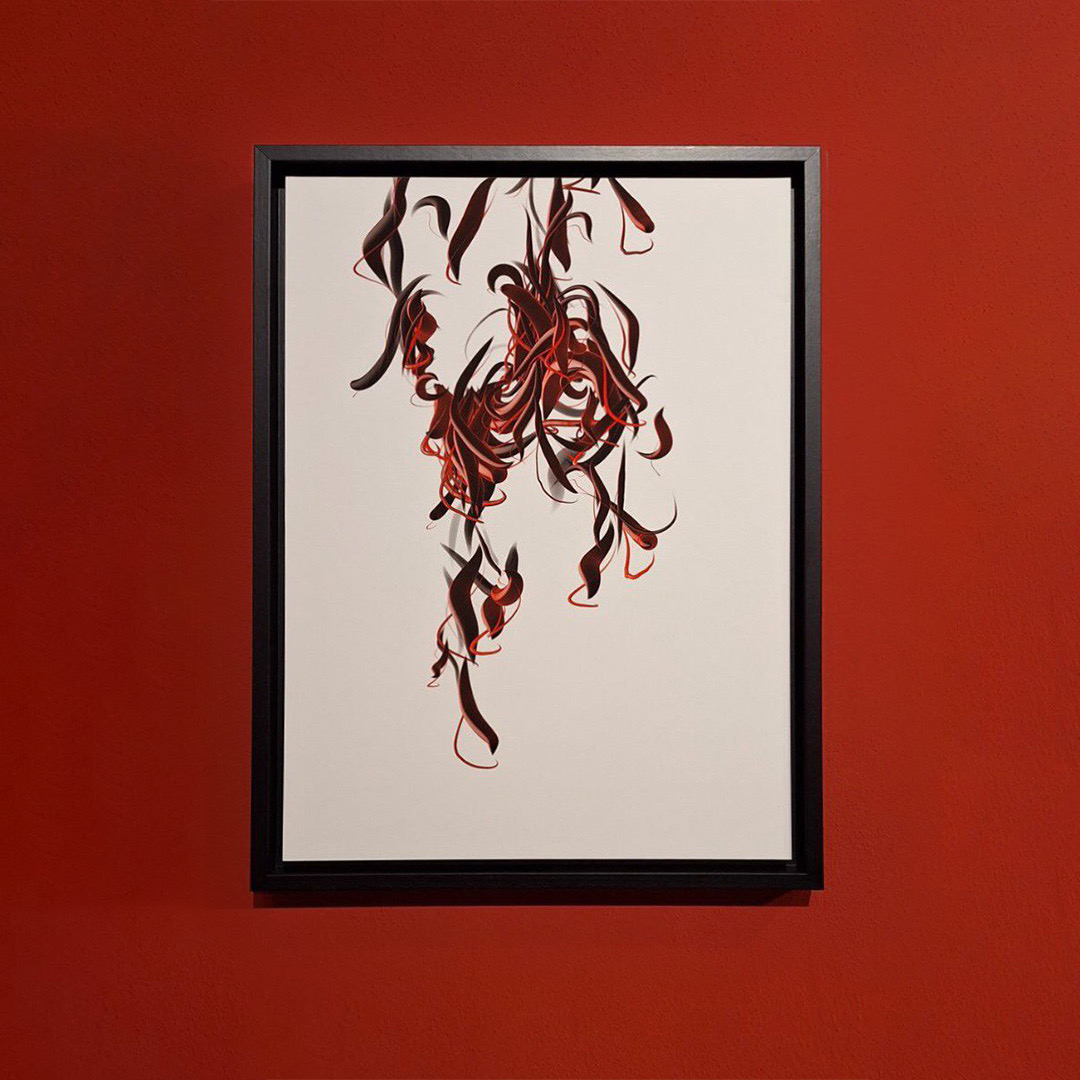
A.lie.ns
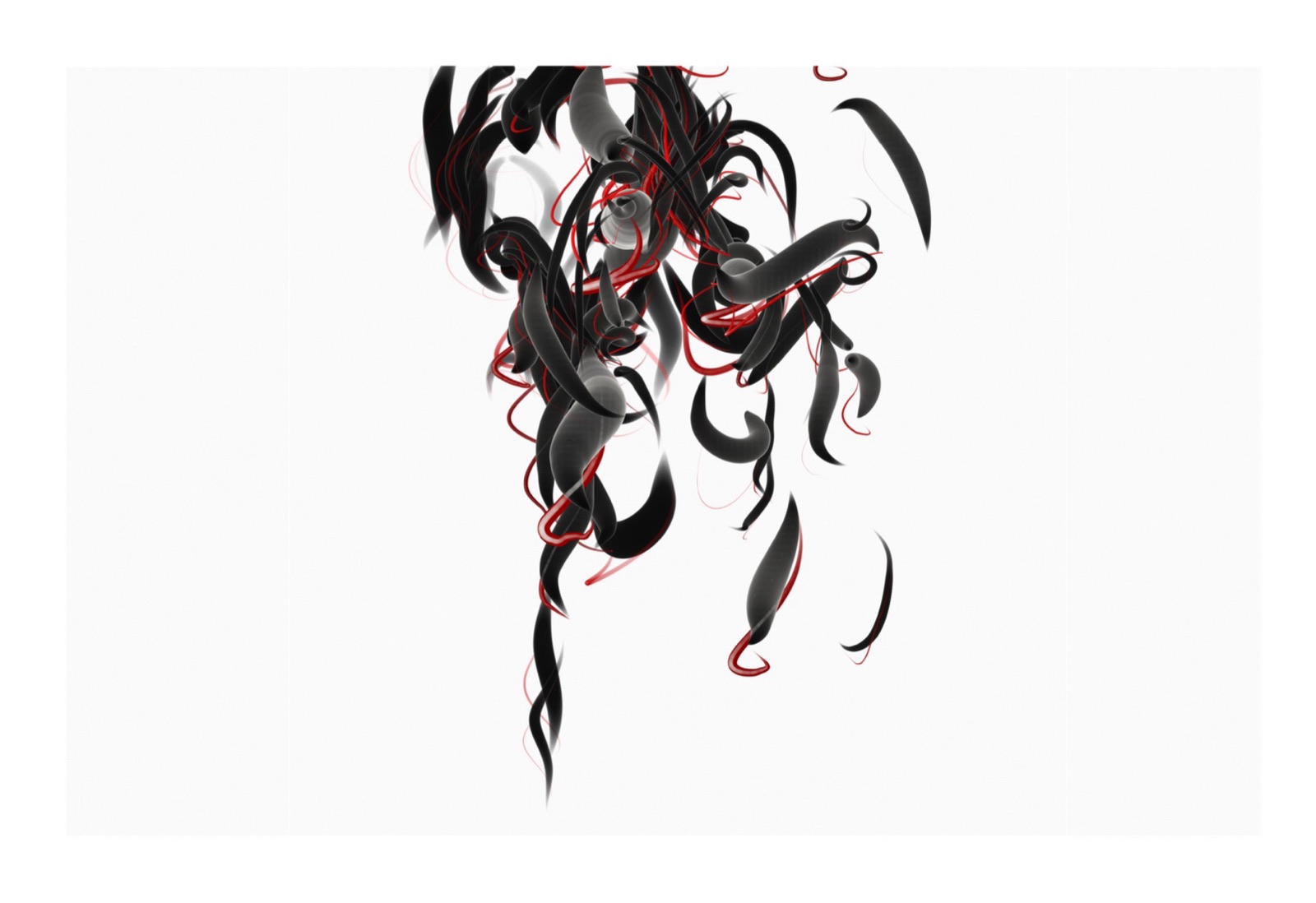
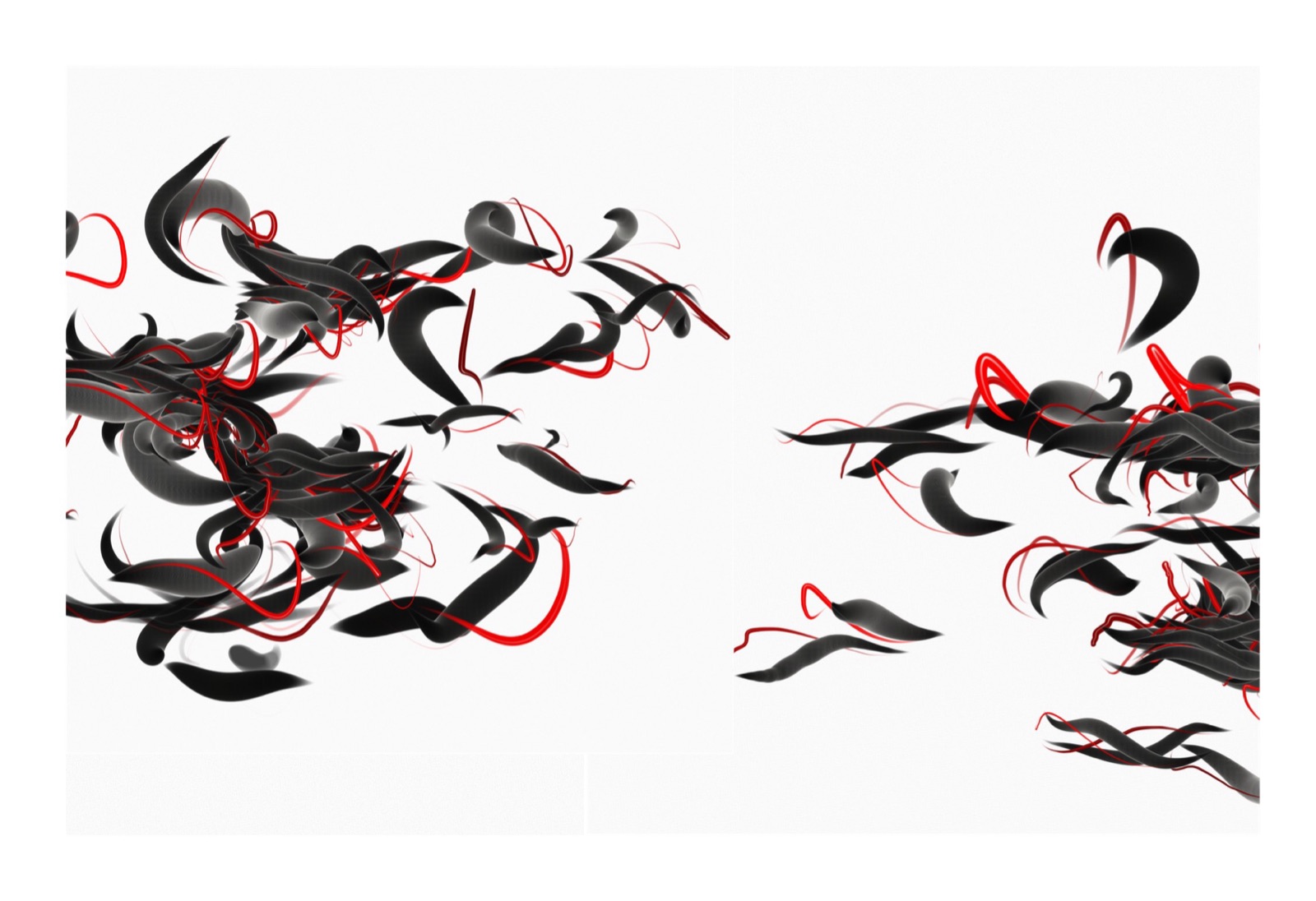
The present project, aptly titled "A(lie)ns," constitutes an experimental endeavor that drew inspiration from previous sketches produced via traditional means, namely, ink and paper. Initially, I sought to implement the formal visual style of ink traces on paper and transform them into worm-like biological forms. Algorithmic art practices allow me to experiment with intuition in an endless journey while producing my artworks. I frequently generate my artwork by transitioning one into another. The stochastic nature of human intuition engenders another type of random encounter in computational systems. Although the randomness in digital systems is not true randomness, it opens up possibilities that no human can conceive.
The technical aspects of my artwork follow three fundamental steps that mimic the traditional way of creating sketches: First, I create a composition with rough paths on paper or a sketchbook with pen and paper. At this stage, there are only lines or curves on my canvas.
Second, I commence experimentation with codes until I am satisfied with the composition and balance on the canvas. Third, I add details such as shadows, highlights, and additional visual elements and play with parameters and automation to produce program variations.
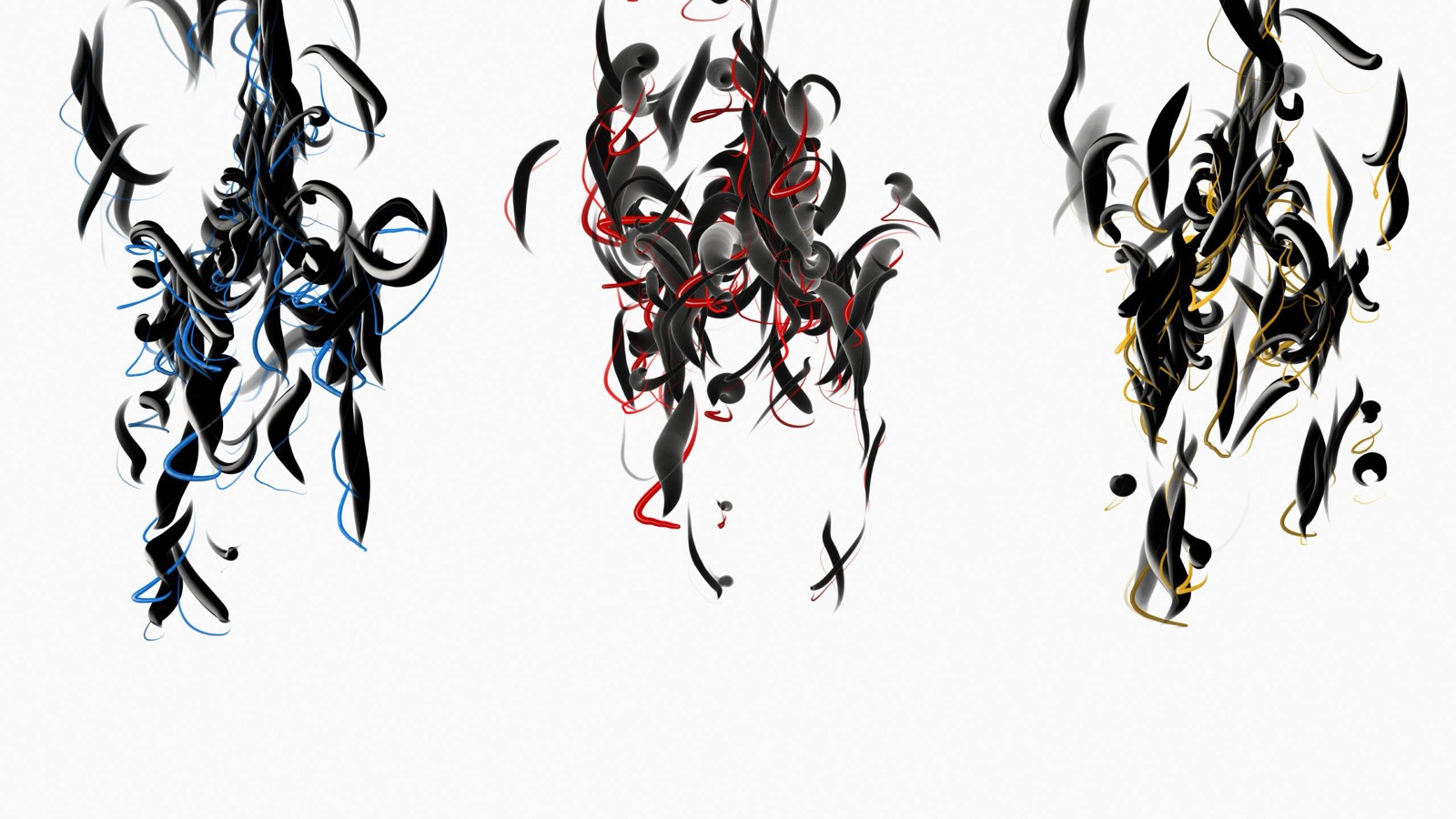
I primarily use C++ for animated artwork and JavaScript for still drawings and prints. The P5JS tool based on the JavaScript programming language underpins the creation of "A(lie)ns." The production method remains consistent; I create traces of objects on the canvas in black strokes using thousands of circle shapes that blend trigonometric functions and Perlin noise algorithms. While trigonometric functions aid in shaping the brush stroke effects by beginning with lower opacity on the edges, Perlin noise sets the poses of objects differently from each other. Using algorithmic noise functions creates the diversity of formal distribution on the canvas.
In the second step, shadows and highlights are generated from the stored positional parameters of each object on the canvas by slightly scaling additional circles and setting the alpha channel of the circle to lower opacity. In the third step, the red-blood vessel-like forms are added by altering the original stored position of each circle on the canvas.
In essence, "A(lie)ns" is created from just circles distributed randomly on a canvas within the established limits of my intuition. Although the resulting forms appear to be alien life forms, they are, in fact, thousands of circular shapes. This exemplifies how even the most complex forms can emerge from basic simplicity.
Short Version The piece of art named "A(lie)ns" utilizes the concept of circular shapes to portray the development of intricate forms from basic elements. The creation process involves three fundamental procedural steps. First, the artist generates object paths to outline the shapes and forms. Then, shading is added to provide depth and dimension to the artwork. Finally, light rays are meticulously applied to the generated paths, enhancing the visual impact of the piece and adding to its complexity.
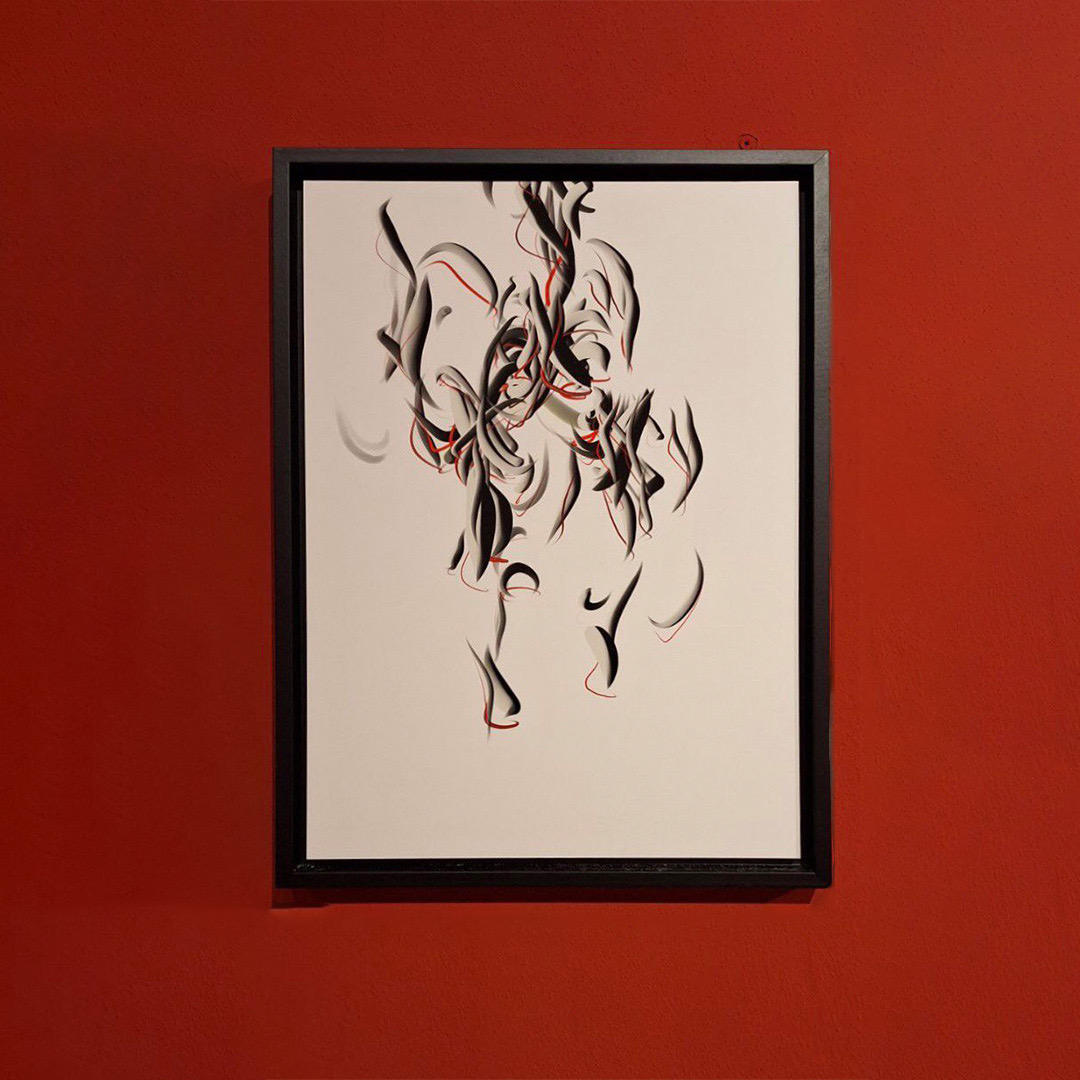
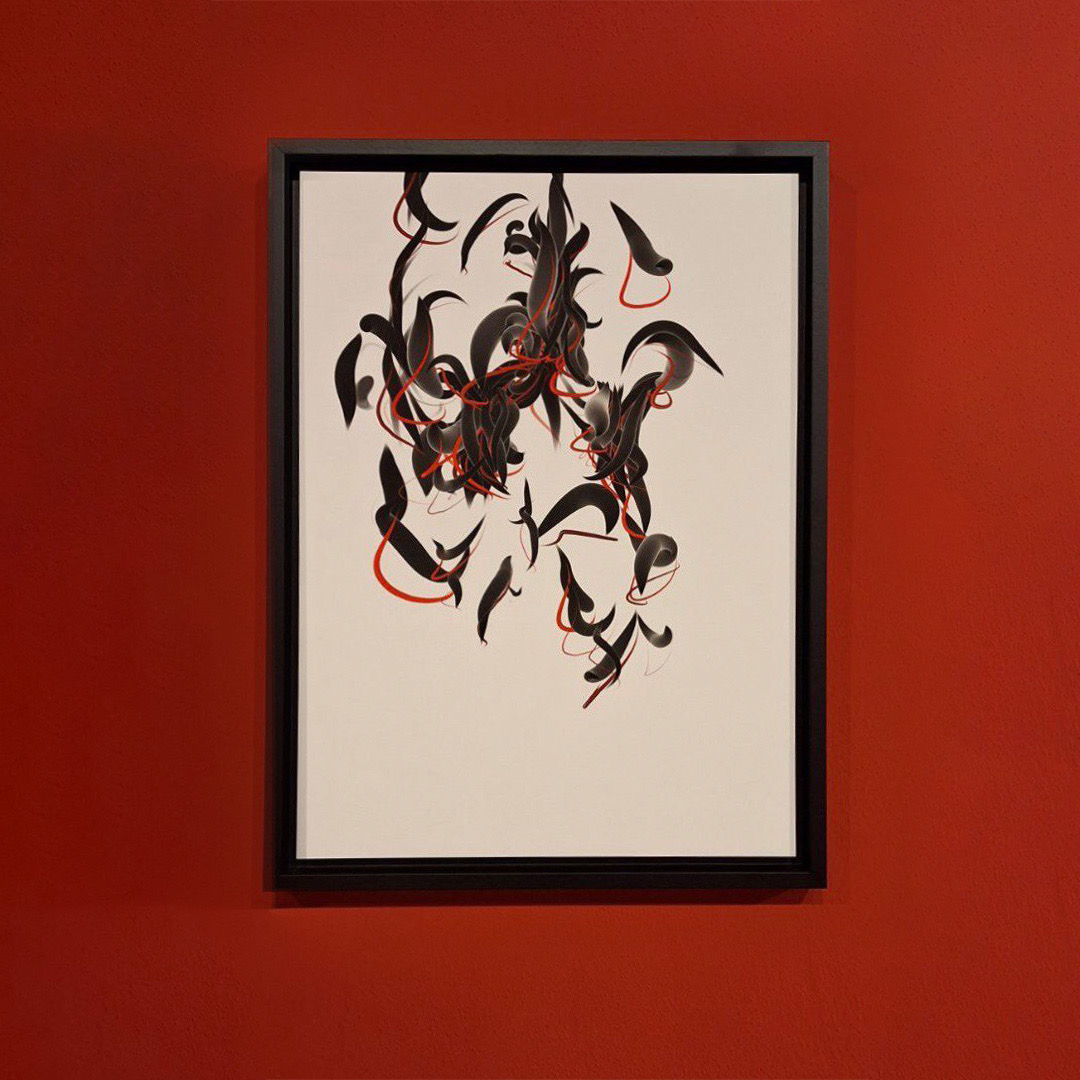
Previous Exhibitions 1. 2023 Algorithmic Art, Ink on paper, print, “A.lie.ns“, RED:100:Zımnen Asimile Olmuş 1 Platform, Maslak 42, İstanbul, TÜRKİYE.
Artwork Information
- Generative Art
- MEDIUM Programming, Computer, Print
- Date 2024
- Location Computer Arts Society, England